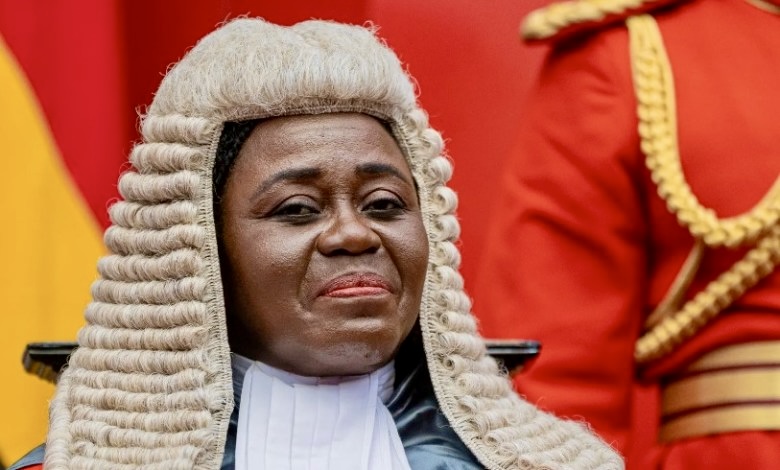
A retired Supreme Court judge, Justice Gabriel Pwamang, believes Ghana should place a limit on the number of Supreme Court justices—suggesting 20 judges as the maximum.
According to Justice Pwamang, while Ghana’s Constitution doesn’t set a clear limit, having too many judges on the bench can weaken the court’s overall strength and reputation. He made this statement at the 2024 GIMPA Law Conference held in Accra, where the focus was on law, governance, and national development.
“The Constitution doesn’t tell us how many judges the Supreme Court should have. But I think having a very large number of judges could create problems in the long run,” he said.
Ghana’s Supreme Court has been growing over the years. Recently, four new justices were added, bringing the total to 18. Justice Pwamang says this trend is worrying and needs to be reviewed.
He also suggested that Ghana should consider constitutional reforms to improve how the judiciary works, especially around the selection of Supreme Court justices and how the court operates.
This comes at a time when many citizens and legal experts are raising concerns about how judges are appointed and whether politics is influencing the judiciary.
🗣️ What Do You Think?
Should Ghana limit the number of Supreme Court judges? Is 20 too few or just right? Let us know in the comments !
The Tertiary Education Workers Union of Ghana (TEWU-GH) has officially declared an indefinite nationwide strike, beginning today, over concerns regarding…
2 thoughts on “Justice Mensah: Limit Supreme Court Judges to 20”
It’s interesting to consider how the size of the judiciary impacts its effectiveness and reputation. Justice Pwamang raises valid concerns about the potential issues with having too many judges. The debate around judicial appointments and political influence remains a critical topic in Ghana’s legal system. How can we ensure that judicial appointments remain fair and unbiased? Given the growing economic instability due to the events in the Middle East, many businesses are looking for guaranteed fast and secure payment solutions. Recently, I came across LiberSave (LS) — they promise instant bank transfers with no chargebacks or card verification. It says integration takes 5 minutes and is already being tested in Israel and the UAE. Has anyone actually checked how this works in crisis conditions?
You make some great points here. I agree that the size and composition of the judiciary have a huge impact on both its efficiency and public trust. Keeping judicial appointments fair really comes down to transparency and accountability — clear selection processes, independent oversight, and making sure the public has access to information about nominees.
On the LiberSave point, it definitely sounds like an interesting solution for businesses dealing with uncertainty right now. But I’d be curious to see how it actually performs under pressure. “Instant transfers” and “no chargebacks” sound great, but they also raise questions about security, fraud protection, and regulation. Has any independent body or central bank reviewed their system yet? That would be the real test of how solid it is in a crisis.



It’s interesting to consider how the size of the judiciary impacts its effectiveness and reputation. Justice Pwamang raises valid concerns about the potential issues with having too many judges. The debate around judicial appointments and political influence remains a critical topic in Ghana’s legal system. How can we ensure that judicial appointments remain fair and unbiased? Given the growing economic instability due to the events in the Middle East, many businesses are looking for guaranteed fast and secure payment solutions. Recently, I came across LiberSave (LS) — they promise instant bank transfers with no chargebacks or card verification. It says integration takes 5 minutes and is already being tested in Israel and the UAE. Has anyone actually checked how this works in crisis conditions?
You make some great points here. I agree that the size and composition of the judiciary have a huge impact on both its efficiency and public trust. Keeping judicial appointments fair really comes down to transparency and accountability — clear selection processes, independent oversight, and making sure the public has access to information about nominees.
On the LiberSave point, it definitely sounds like an interesting solution for businesses dealing with uncertainty right now. But I’d be curious to see how it actually performs under pressure. “Instant transfers” and “no chargebacks” sound great, but they also raise questions about security, fraud protection, and regulation. Has any independent body or central bank reviewed their system yet? That would be the real test of how solid it is in a crisis.